The 2014-2015
Red Dot Book Award shortlists, the 8 books in four age categories we choose for our students to read, consider, and compare -- in order to determine a favorite -- for a school and for the island nation of Singapore -- have been announced. I want to celebrate them, but also point out the books that almost made it -- and still could in a future year -- and certainly deserve a wider reading in the meantime.
You can read the background to our awards and criteria in a blog post I did a year ago -- see
Looking Back: the evolution of the Red Dot Book Awards and the Readers Cup in Singapore.
Basically, we look at:
- publication date (past four years, e.g., 2011-2014);
- ease of access (where a paperback version via one of the free-shipping online vendors (e.g., Book Depository or Fishpond.sg) is the ideal -- and an ebook available is a bonus);
- genre (one nonfiction? one graphic format? one poetry or verse novel? as well as a mix of fiction genres);
- gender (mix of female/male protagonists or appeal);
- country of origin or flavor (wanting a mix, but recognizing some countries just produce a whole lot more than others, and preferring at least one book with a Singapore or Asian connection);
- literary vs. popular appeal (considering whether a book is already played out in terms of popularity or likely to be popular -- as well as books that teachers will love for their literary, teachable aspects);
- appropriateness for the age categories of our award.
- content, where we favor books with multiple possible connections -- text-to-text, text-to-self, and text-to-world.
Balance trumps everything -- which means every year there are perfectly good books that don't get in the basket, because they unbalance it in some way. With just 8 slots, we don't really want two wordless books or two poetry books or two biographical books, etc. So I thought it would be good to lay out what is in this year's baskets AND highlight some books we seriously wanted, which lost out in some way, due to the devil of the balance. NB: most of the un-chosen titles are theoretically still in the running for next year's lists....
Here are this year's shortlists:
Our international spread is pretty good: 2 USA, 1 Australia, 1 Iceland, 2 UK, 1 Canada, and 1 France.
We have one memoir (by Alan Rabinowitz, the large cat expert who suffered severe stuttering as a child, but found solace in speaking to animals --
listen to him tell the same story to grown-ups on this "The Moth" podcast). One story of someone "different" finding a friend. One non-fiction book of questions to consider, and a Peter Reynolds (of "The Dot" fame) story that considers creativity. A beautiful French book which is a modern version of "stone soup". A boy and his dog story that features learning Chinese. A tale that connects creatures and humans from India all the way to Australia. And a good-old-fashioned story of a young child befriending a lost lion, as well as a book by an Icelandic author where one unusual person finds a perfect match in another unusual person.
Click here for the longlist Early Years books we didn't choose... including another French book (
Bear's Song), a lovely simple Korean bedtime tale (
Blanket Travel); the perhaps too-well-known-already
Day the Crayons Quit; the latest-greatest from Peter Brown (
My Teacher is a Monster); the rhyming fun of
The Brothers Quibble which wasn't readily available; and the most recent wordless genius of David Wiesner (
Mr. Wuffles!).
Our international spread is good: 2 USA, 1 Australia, 1 UK, 1 India, 1 Sweden, 1 Singapore, and 1 Germany.
We have one picture book biography of Lee Kuan Yew (appropriate as the 50th anniversary of Singapore is coming up next year). A meta-fiction frolic from Jon Scieszka. A similarly silly offering from the ever-beautiful Tara Books in India featuring an Inspector-Clouseau-type character. A magical chapter book for young readers from the best-selling author of "Inkheart". A beautiful-produced purple chapter book of historical fiction inspired (
read article here) by Ada Lovelace (daughter of Lord Byron and the first female programmer). An Australian knights-and-swords fantasy featuring Tommy, a kitchen girl (where there is a SGD 15 book -- "The Secret of Flamant Castle" available containing not just the first title -- "The Secret of the Swords" -- but a further five adventures -- so a bargain of a book in terms of reading on...). And two realistic fiction chapter books, one about a boy in 2nd grade -- "The Year of Billy Miller" -- by the American Kevin Henkes, and the other about a girl just starting school -- "My Happy Life" -- by the Swedish Rose Lagercrantz.
Click here for the longlist Younger books we didn't choose... including
a picture book biography of Malala, the Nobel Peace Prize winner (because we have her original memoir in our Mature category); the knowing sarcastic humor of
Timmy Failure; two realistic fiction verse novels we really liked:
"Words with Wings" by Nikki Grimes, and
"Little Dog Lost" by Marion Dane Bauer; a realistic fiction story of an Australian girl who goes to Pakistan with her parents to help flood victims (
Kelsey and the Quest of the Porcelain Doll); a cute graphic novel about people who don't fit in (
Odd Duck); a realistic novel about an Omani boy about to move to the States (
The Turtle of Oman); a Singapore mystery/adventure novel in the vein of last year's Red Dot choice, Sherlock Sam (
Danger Dan Confronts the Merlion Mastermind); a wordless book for older readers -- Aaron Beck's
Journey; a light-hearted quest out of the UK:
The Magnificent Moonhare; scary stories from James Preller (
Home Sweet Horror); the trials and tribulations of a 7-year-old (
Penguin Problems); and comedic kung fu
chickens on a mission by Jennifer Gray.
Our international spread is not bad: 3 USA books, 1 China (Mongolia) book, 2 UK books, and 2 Australian books.
We have a graphic memoir (think:
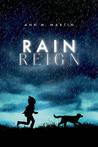
Smile) about a deaf girl who has to cope with hearing aids. An adventurous trio of ghost-busters in London in the future (by the beloved Jonathan Stroud) (you have read the Bartimaeus sequence, haven't you?). A realistic fiction dog story set in Mongolia (get the hankies ready). Another realistic fiction story involving a dog, but this one told by a girl with Asperger's Syndrome, set in the US during a natural disaster, also with tear-provoking moments. A mystery/disaster narrative post-cyclone in Australia. A fairy-tale-like adventure across the rooftops of London to find a long-lost mother. A suspend-reality experience where a grandfather shows up in middle-school thanks to science fiction. And a historical fiction story -- almost a graphic novel because of the amount of visual material -- of a young man and his horse who sign up for World War One -- and end up in the horrors of the Middle East.
Click here for the longlist Older books we didn't choose... NB: In this category there are a lot.... We had a hard time selecting just eight. So please -- go out and read all the ones listed here that we didn't choose. They are worth it... including the
Star-Wars-meet-Cinderella dystopia set in Beijing, first in a sequence;
Other Brother by Simon French; the
Unwanteds (which won in the Morning Calm Medal in Korea); the
adventure of escaping from a library; the
beautifully written and sensitive offering by Sonya Hartnett re WWII evacuees;
"A Time to Dance" -
a verse novel about an Indian girl who realizes she can dance even though she isn't whole (and several people have suggested
"The Running Dream" as a perfect complement to it); a
dystopia about British refugees struggling in France by Gillian Cross; a brilliant
British gothic/horror fantasy set in the 19th century by Jonathan Auxier; a
realistic novel set back in the 1980s in India where boys struggle to become tiffin carriers; a moving middle-school novel about
a gifted and talented girl creating a family out of a group of misfits;
Rick Yancey's latest adventure; Gordon Korman's latest offering -- re an
ungifted boy who ends up with the smarties and helps them develop in a different way; a
noble dystopia presented by Malorie Blackman;
"She's Not Invisible" by Marcus Sedgwick -- such a strong contender -- with parallels to the beautiful
Picture Me Gone; Jaclyn Moriarty's
"A Corner of White" -- a parallel world fantasy;
"Hero on a Bicycle" by the classic Shirley Hughes; "Liar and Spy" by Rebecca Stead -- too well known already by our students perhaps; Jared Diamond re-offering his
"The Third Chimpanzee" in a young adult version; Eoin Colfer launching a new series:
The Reluctant Assasin; the Indian mythology equivalent of Rick Riordan's Greek/Roman ones - the
Ash Mistry series; a time travel book set during natural disasters of fire and water in Australia --
"The Four Seasons of Lucy McKenzie"; and a book about Aussie soldiers and horses in WWI -- to complement Morpurgo's "War Horse" and Wolfer's "Light Horse Boy" --
"Loyal Creatures" by Morris Gleitzman.
Our international spread isn't bad: 3 USA, 1 Australian, 1 New Zealand, 1 India, 1 UK, 1 Pakistan.
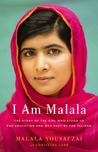
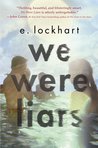
We have the memoir of the youthful Nobel Peace Prize winner. An unreliable narrator uncovering a mystery. A historical novel set in Malaya during WWII and the region's post-war conflicts. A novel within a novel -- giving us parallel worlds in more ways than one (and highlighting
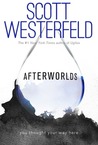
NaNoWriMo and the writing process). A graphic rendition of the Ramayana from Sita's point of view. An emotional (and visual) novel that examines cancer from the viewpoint of a teen whose mother is dying. A post-apocalyptic survival novel set in Australia. And an amusing and informative exploration of literary devices, all based on the nursery rhyme about three blind mice.
Click here for the longlist Mature books we didn't choose... including Meg Rosoff's
Picture Me Gone - which everyone should read; Sara Zarr's
"The Lucy Variations" about the power of family and expectations, framed in the world of classical pianists; a
graphic version of war set in Uganda's LRA; an
Indian novel about a girl's world coming apart upon learning she is adopted; the Carnegie-awarding winning
"Maggot Moon";
dragon slayers in Canada -- not to be missed;
desperate, lonely lives in Iceland;
historical fiction from Australia (which proved hard to source, hence it had to be eliminated -- but worth finding);
"BZRK" by the author of the popular "Gone" series; if you don't know Brandon Sanderson, then start with his
"Steelhearts" re a future ruled by super-humans;
"I Kill the Mockingbird", a novel re 8th graders obsessed with making people obsessed with "To Kill a Mockingbird";
a novel about the endangered bonobos in the Congo; the multiple-award-winning
"Aristotle and Dante Discover the Secrets of the Universe"; and
the sins of the brother achingly explored by Susin Nielsen, author of "Word Nerd".
We'll be shifting our shortlist selection announcement time to June 1, rather than November 1 -- as we always underestimate how long it takes, which means libraries are delayed in getting books on the shelves. So with any luck we will make this a spring task, rather than an autumn one.